
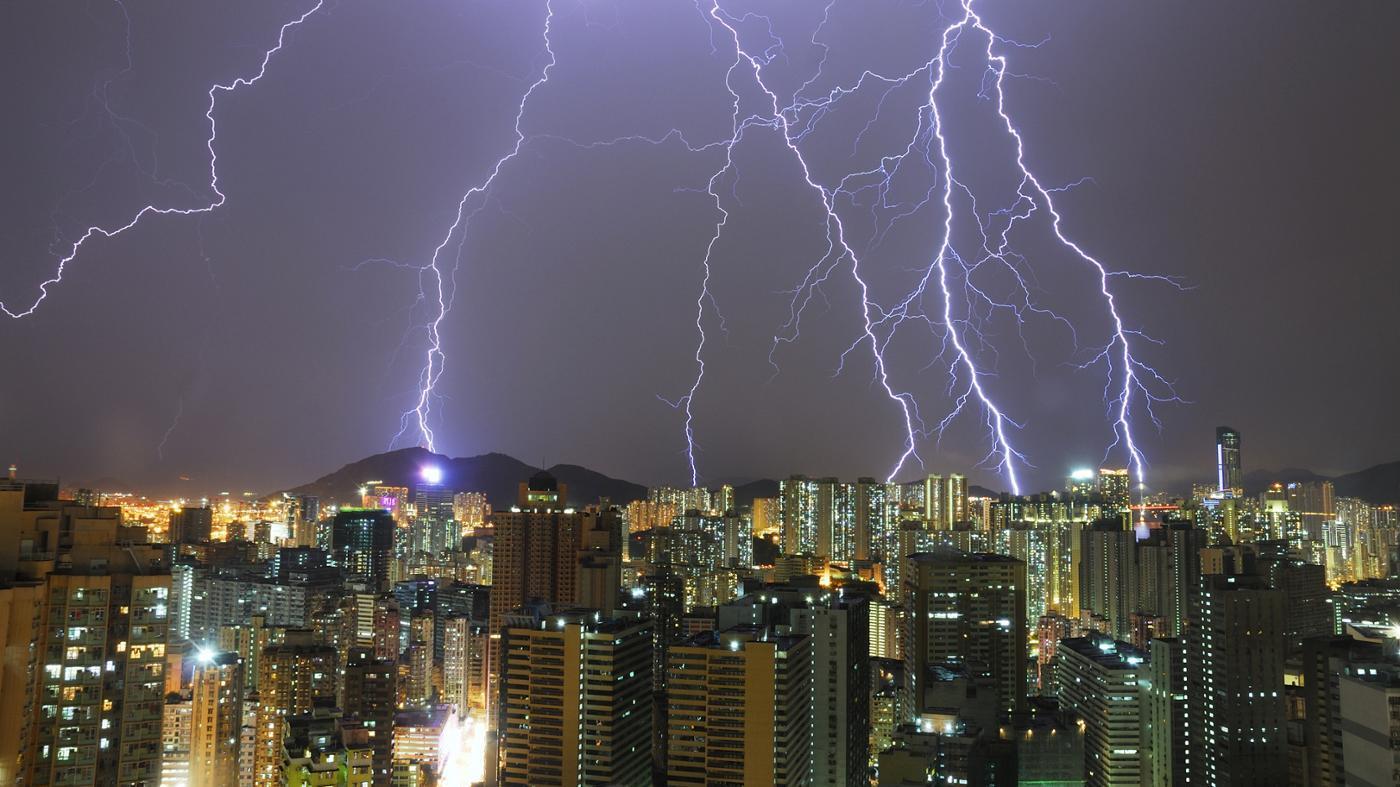
Earthing and lightning protection systems safeguard people, buildings, and electrical equipment against fault currents and lightning strikes.
Earthing and lightning protection systems are essential safety solutions designed to protect people, structures, and electrical equipment from electrical faults, leakage currents, and lightning strikes. Earthing provides a safe path for fault current to flow into the ground, helping protective devices operate effectively and reducing the risk of electric shock.
Lightning protection systems use air terminals, down conductors, and earthing electrodes to provide a controlled path for lightning current to reach the ground. Surge protection devices can also help protect sensitive electrical and electronic equipment against transient overvoltages.
These systems are widely used in commercial buildings, factories, hospitals, data centers, residential complexes, and infrastructure projects. Proper design, installation, bonding, and periodic testing help improve electrical safety and protect valuable assets.
Reliable fault current dissipation
Effective lightning strike protection
Reduced electric shock risks
Surge protection compatibility
Corrosion-resistant components
Durable grounding electrodes
Equipotential bonding support
Improved equipment safety
Periodic testing capability
Flexible installation configurations
| Parameter | Specification |
|---|---|
| Product Type | Earthing / Lightning Protection |
| Earthing Method | Pipe / Rod / Plate |
| Electrode Material | Copper / GI |
| Conductor Material | Copper / GI / Aluminum |
| Lightning Protection Type | Conventional / ESE* |
| Air Terminal | Copper / Aluminum |
| Down Conductor | Copper / Aluminum / GI |
| Earth Resistance | Design Dependent |
| Surge Protection | Type 1 / Type 2 / Type 3 |
| Bonding System | Equipotential Bonding |
| Inspection Method | Earth Resistance Testing |
| Installation Type | Indoor / Outdoor |
| Applicable Standards | IS / IEC Standards |
| Application | Commercial and Industrial Facilities |
*Values vary by project and selected model — final specification is confirmed at the time of quotation based on site requirements.
Share your flow, head, and site details — we'll recommend the right model and configuration.
Request a Quote
Description goes here...